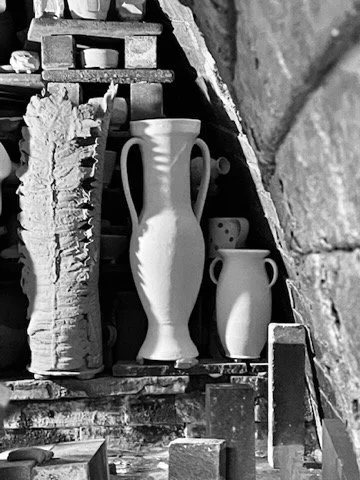
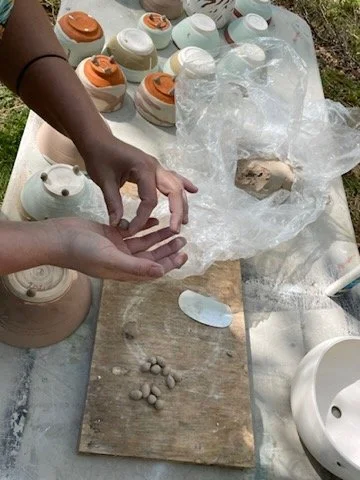
After the ceramics have been bisque fired, typically in an electric kiln, each pot must have wadding (a heat resistant material) applied to the bottom of each pot. This prevents pieces from sticking to the shelves in the kiln.
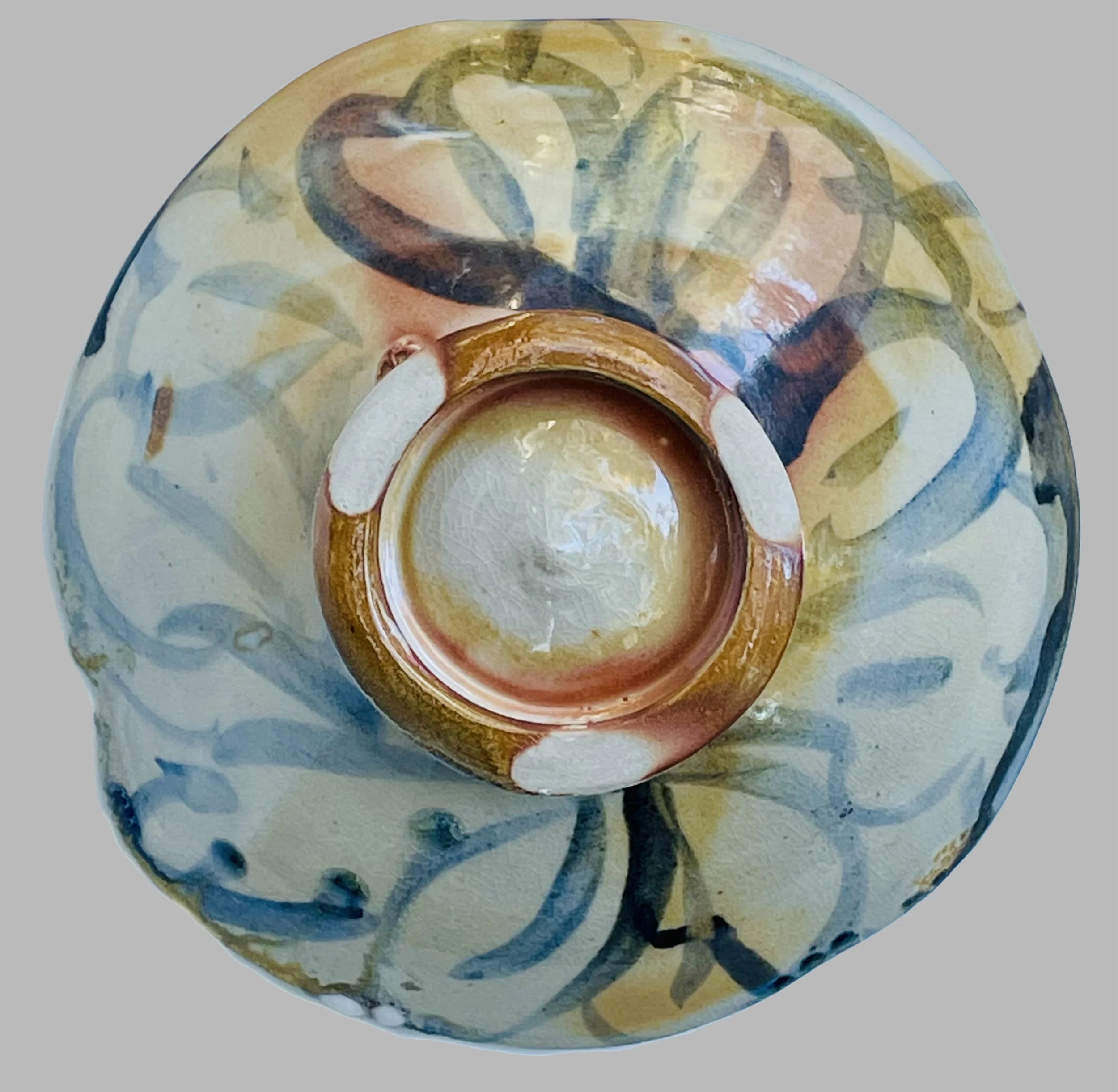
The application of the wads leaves tell-tale marks on the bottom of the pot once it is fired. This is an additional step in wood firing that is not necessary in electirc firing, for example.
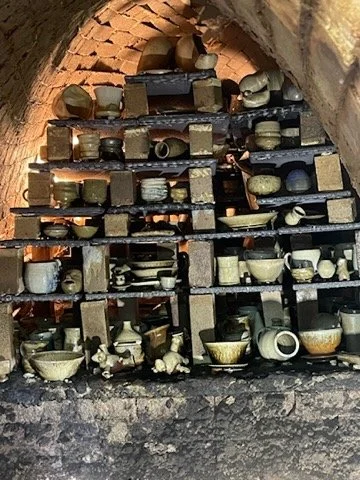
Once wadding is complete, each piece is stacked carefully on shelves. Considerations are made as to how the flame might behave in the firing and the number/sizes of the works are made during the loading which takes a team of people several hours. The shelves must also get wadding material placed between themselves and the posts.
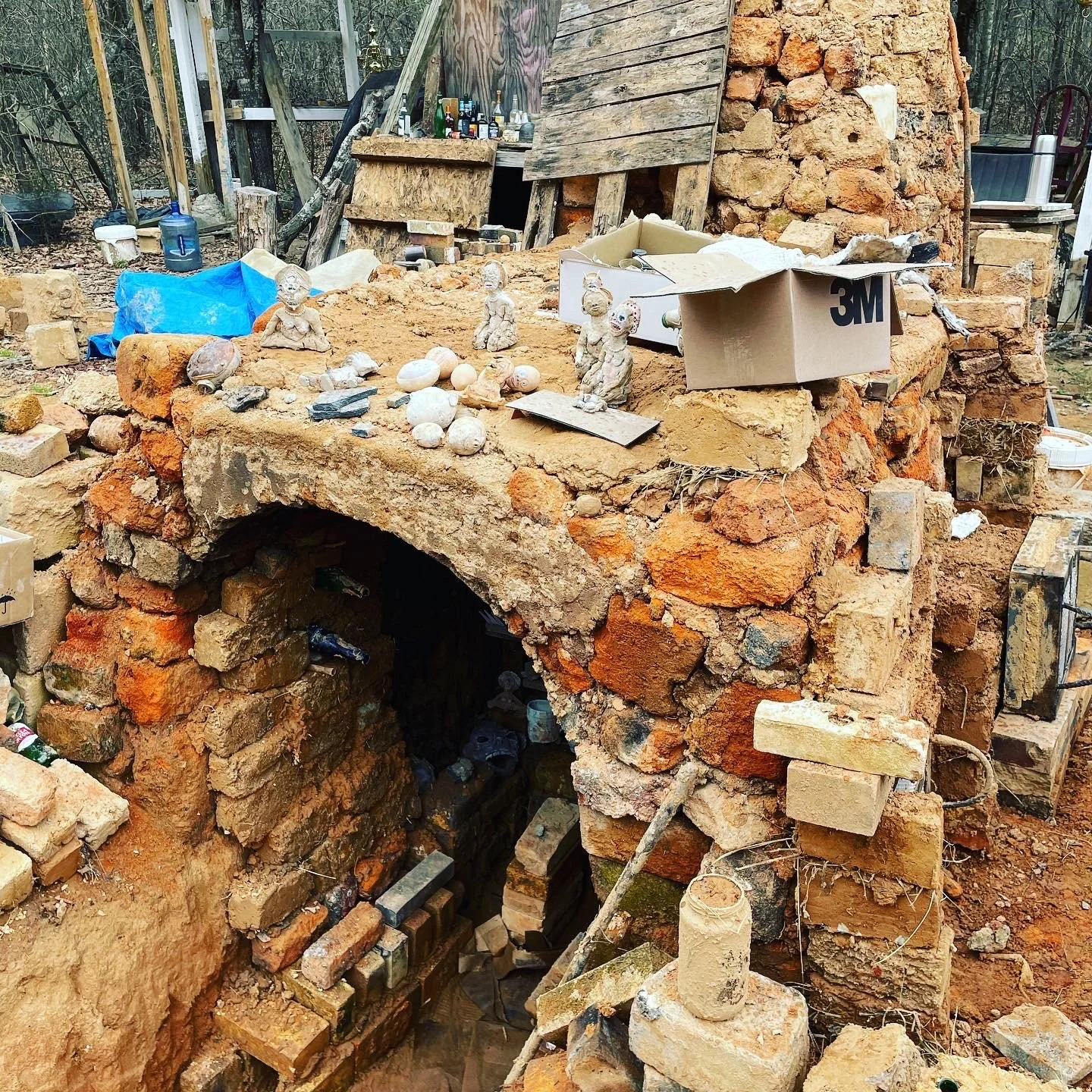
This kiln, located at the Hambidge Center in Rabun Gap Georgia, was designed by Ben Owen III and is a type of tunnel kiln. Many different style wood kiln designs exist.
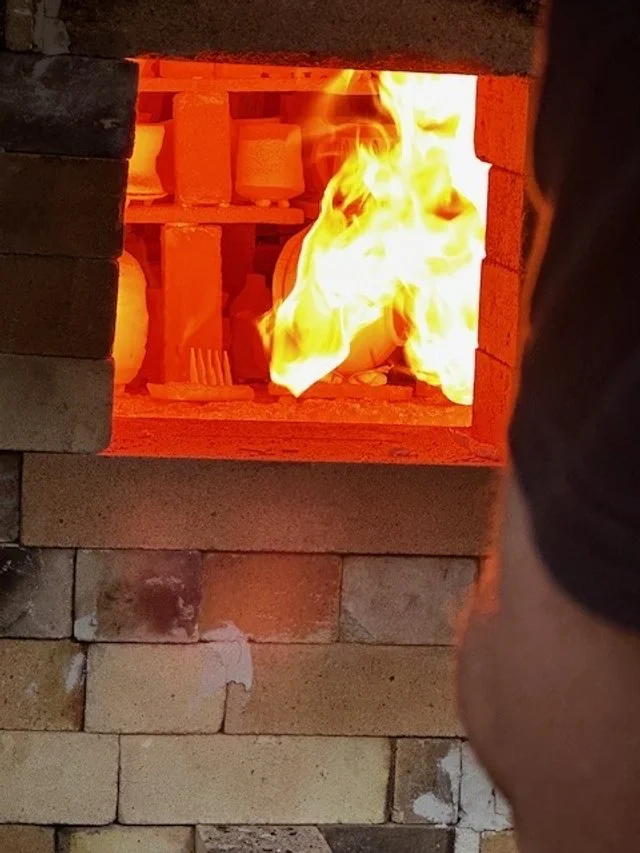
The firing process begins manually. This ancient process of getting to around 2381degrees F or 1305 degrees C using only wood can be done alone, but usually with a team of people. Groups of artists work around the clock in shifts stoking the fire with various types of wood to try to get the kiln to temperature.
Temperatures are recorded on the hour and adjustments may be made to dampers in the kiln to help achieve desired outcomes.
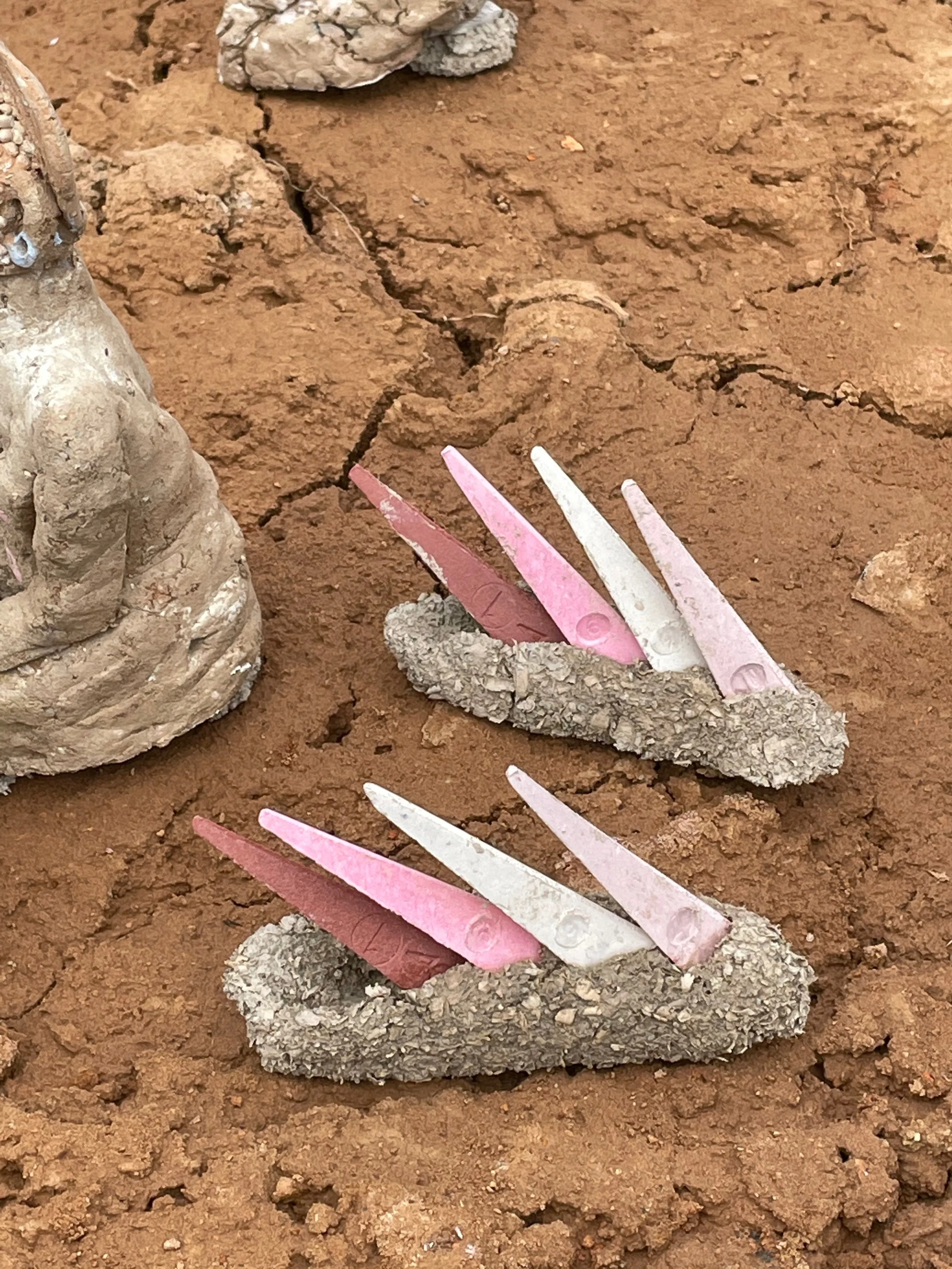
It is important to note, that this process is very different than using an electric kiln, where you program a firing cycle and leave. This type of firing requires 24 hour monitoring and adjusting.
Wood firing requires the use of ‘cone packs’, pictured here. These cones will bend as the kiln reaches various temperatures, allowing the team to know what stage of the firing we are at. These may be viewed through spy holes in the kiln.