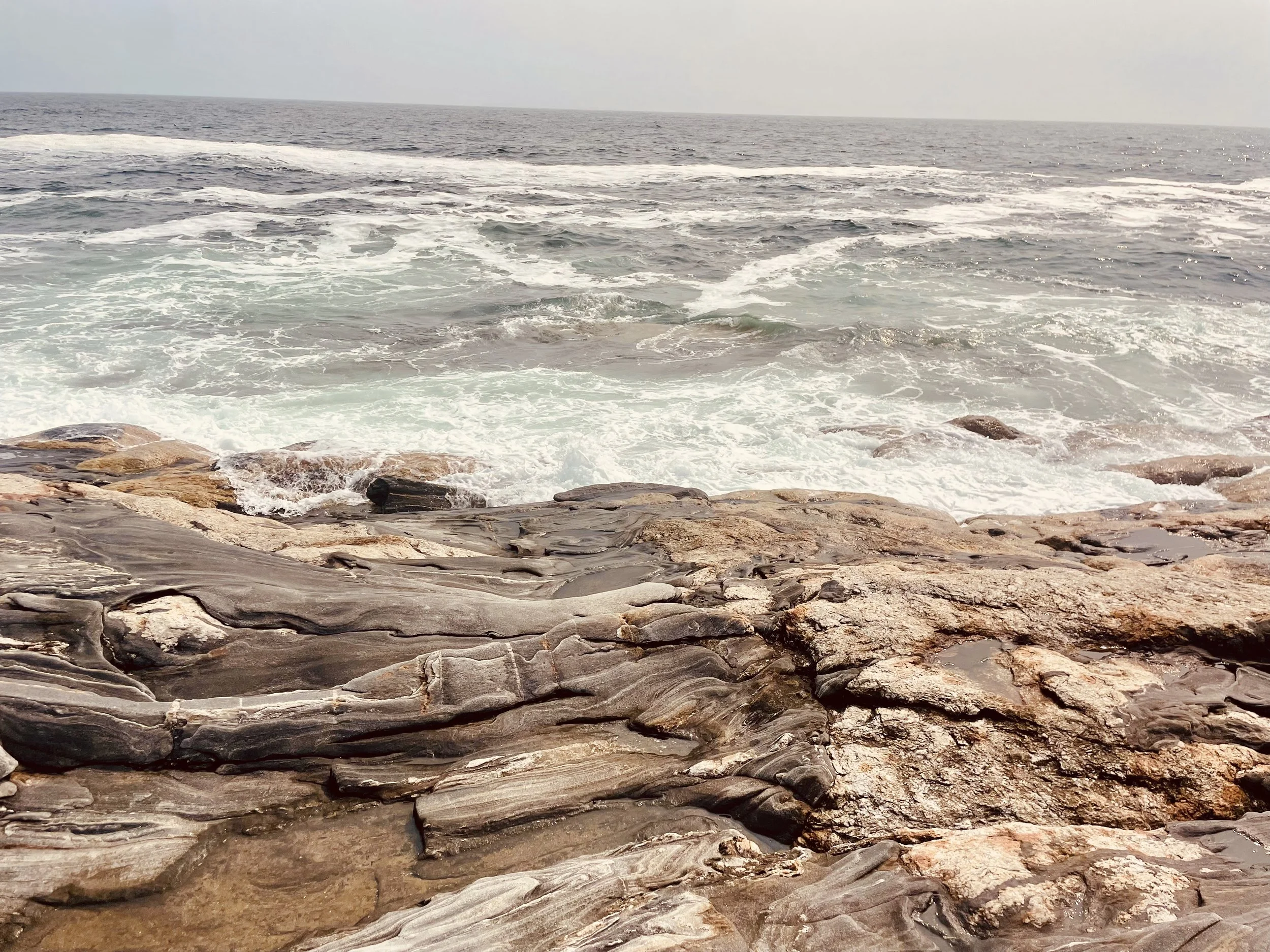
Most associate wood firing with fire, but I think of water. Water physically moves through every part of the ceramic process. Water is what activates clay, what gives it its life and flexibility. It’s the reason the material responds to touch the way it does: pliable, shifting, sensitive. The earliest stages of working with clay are, in many ways, a conversation with water. And that conversation stays with the work, even as it moves toward fire.
Water’s nature, its adaptability as well as its ability to yield or resist, has become central to how I understand my relationship with clay. As someone who came to ceramics from a painting background, I’ve always been drawn to the fluid, intuitive side of making. I’m less interested in precision and more interested in movement, responsiveness, and mark-making that feels alive. Clay, like paint, records touch, but it also carries memory and transformation.
This is why I’m drawn to wood firing. There’s something elemental in the way it completes the work moving from water and earth into flame and air. In the wood kiln, fire behaves almost like water: it flows, pools, surges, and leaves behind a surface that reflects its movement. Ash settles on the work like sediment, while flashing patterns mimic the currents and eddies of a river. What begins as soft, wet clay is transformed by heat and atmosphere into something permanent but still marked by that original fluidity.
Wood firing, for me, is where all these elements meet. It’s not just a method of finishing a piece. It’s a final act of surrender. I bring the work to the edge, and then the fire takes over.